7 Stocks Billionaire Fund Managers Are Crazy About

Insider Monkey tracks nearly 400 hedge fund managers and prominent investors. Thirty nine of these fund managers are billionaires. Nowadays readers have access to websites that track the daily changes in billionaires’ wealth. We wanted to track the performance of billionaires’ topstock picks. By looking at our Billionaire Hedge Fund Index, investors may be able to decide whether it makes sense to imitate billionaires’ stock picks without paying them hefty fees. Warren Buffett, George Soros, John Paulson, Jim Simons, David Einhorn, Ray Dalio, and T. Boone Pickens are among the 39 billionaires we’re tracking. Billionaire fund managers’ top 30 stock picks returned 16.7% in 2012 as of March 16, vs. 12.3% gain in the S&P 500 ETF (SPY). Here are the top 7 stocks they’re crazy about:
1. Apple (AAPL) is the most popular stock among billionaire fund managers. Nearly half of them had a large position in Apple at the end of December. Apple is also the most popular stock among “ordinary” millionaire hedge fund managers (see the 10 most popular stocks). The stock gained 45% this year as of March 16th. We have been extremely bullish about Apple since we started writing here at Trading Deck at the end of September. Apple was the most popular stock among hedge funds at the end of September as well. We have been telling you that technology stocks are extremely undervalued as a sector and Apple had single digit forward PE multiple at the time. Today we are still very optimistic about the stock. Its 2012 forward PE ratio is 13.5 which is still less than the market. This is a stock that is expected to increase its earnings by nearly 20% per year over the next 5 years. It should easily trade above $800 over the next couple of years. Ken Griffin had the largest position in Apple at the end of December.

2. Google (GOOG) is the second most popular stock among billionaire hedge fund managers. The stock had a disappointing performance so far in 2012, losing 3.2% as of March 16. We are optimistic about Google as well. The stock’s 2012 forward PE ratio is 17 which is more than 25% higher than that of Google’s. They have similar expected growth rates though. We think Google deserves a slight premium over Apple because it is less exposed to competition from other search engines. This is not a stock that will go up 50% this year but it should deliver healthy returns over the long run. Julian Robertson and his tiger cubs Stephen Mandel and Chase Coleman are the most bullish fund managers about Google. We should note that Chase Coleman has an excellent track record of picking winners in the internet space and he made more than $1 billion for his investors by betting on Facebook in its infancy (check out Chase Coleman’s other internet stocks).

3. El Paso Corp (EP) is the third most popular stock among billionaire hedge fund managers. Carl Icahn made a bundle in EP by investing more than a $1 billion before its merger with Kinder Morgan was announced. He had $1.9 billion invested in the stock at the end of December. The other fund managers were pursing El Paso as a merger arbitrage candidate. These stocks usually trade at a discount to their announced merger price because investors usually aren’t 100% certain that the merger will go through as planned. Billionaire hedge fund managers made 9.6% since the beginning of this year by correctly betting that El Paso – Kinder Morgan deal will go through.

4. News Corp (NWSA) is the fourth popular stock among billionaire hedge fund managers. When other investors were dumping News Corp shares because of the hacking scandal billionaire hedge fund managers were buying them. The stock recovered all of its loses last summer. It is also slightly outperforming the market this year. Paul Singer had the largest position in NWSA among the billionaires we are tracking.

5. Medco Health Solutions (MHS) is the fifth popular stock. This is also a merger arbitrage play. The stock returned 25.7% this year as of March 16. D. E. Shaw had more than $300 million invested in the stock.

6. Microsoft (MSFT) is the sixth most popular stock among billionaire hedge fund managers. Ken Fisher and David Einhorn had the largest stakes in the stock. Last May at the Ira Sohn Conference David Einhorn called for the resignation of Steve Ballmer and stated that Microsoft is significantly undervalued. The stock gained 38% since then (read the transcript of Einhorn’s presentation).

7. Wells Fargo (WFC) is the seventh most popular stock among billionaire fund managers. The stock’s 2012 gains are around 23.4%, ten percentage points more than the S&P 500 index. Warren Buffett has the largest stake in this banking giant at the end of December. There were 9 other billionaire fund managers with Wells Fargo positions.

 Insider Monkey has 30 stocks in its Billionaire Hedge Fund Manager Index and these 30 stocks (see the entire list here) had an average return of more than 16% this year as of March 16. The top 7 stocks that we discussed above performed even better. Five of these seven stocks outperformed the market and they had an average return of 19.9%, vs. 12.3% for the SPY. It is too early to turn this into a trading strategy, but tracking this index is going to be more fun than tracking billionaires’ wealth every 15 minutes.
Read More!
Billionaire Hedge Fund Manager Index

Insider Monkey sitesi billionaire hedge fund manager index adinda bir endeks tasarladi ve dolar milyarderi hedge fon yoneticilerinin en cok satin aldigi hisselerin performansini takip ediyor. Bu yilin ilk 2.5 ayinda milyarderlerin en cok sevdigi 30 sirket borsa endeksinin 4.4 puan uzerinde bir performans sergilemis.

Bu konuyla ilgili yaziya Billionaire Hedge Fund Index baslikli yazidan ulasabilirsiniz. Read More!

Last Week’s Notable Insider Purchases

Insidertransactions are usually worth looking at. Though insider purchases or sells do not always send clear “buy” or “sell” signals, it is always a good starting point to choose which stocks to be analyzed. In this article, we are going to take a closer look at a few insider purchases reported to SEC during the last week. We selected a few notable insider purchases with large dollar amounts purchased and large number of shares purchased. We also focused on stocks with relatively large market caps (above $1.5 billion) because these have enough liquidity to absorb sudden surges in demand.

Valeant Pharmaceuticals International Inc (VRX): Insiders are showing a lot of interest in VRX recently. In an earlier article we published this week we mentioned that Valeant’s EVP and CFO Bradley Howard Schiller bought 9300 shares of VRX at $53.4717 per share on March 1 and another 9300 shares at $58.8107 a day later. Schiller purchased additional shares again on March 6, when he bought 9200 shares of VRX at $53.5276 per share. We were already bullish about VRX before the insider purchases were disclosed. Schiller’s purchases increased our conviction in the stock.

Spectrum Brands Holdings Inc (SPB): This was the largest insider purchase in large-cap stocks reported to SEC at the end of last week. As a large shareholder of SPB, Phil Falcone’s Harbinger Capital Partners reported to purchase 249,900 shares of SPB at $29 per share on March 7. The stock is now trading at $29.37 per share, up 1.28% from the price it was purchased at. SPB was also the largest position in Harbinger’s 13F portfolio at the end of last year. The fund had $764 million invested in SPB as of December 31, 2011. The number should be over $800 million as Harbinger has been continuously purchasing this stock over the past few months.

SPB’s management team has been adjusting the portfolio by modestly shifting from durables to consumables. For example, the company has acquired Black Flag and Furminator last year, which will improve the SPB’s margins. For the three months ending January 1, 2012, the company reported financial results in line with the analysts’ expectations. Its net income was $13.1 million in that period, versus a net loss of $19.8 million for the same period a year ago. SPB is expected to make $2.46 per share in 2012 and $2.88 per share in 2013. Over longer term, the company’s earnings are expected to grow at an average of about 10%. The forward P/E ratio of SPB is 11.9, a discount to the 16.41 for the average of its peers. We also see strong free cash flow generation ability of SPB. Its management team has an aggressive deleveraging plan. They reiterated their target gross debt to EBITDA to be less than 3.4X at the end of FY2012. Overall we like SPB. We think the company will outperform the market as well as its peers over the next couple of years.

Stone Energy Corp (SGY): Another stock bought by insiders recently is SGY. Director Phyllis Taylor purchased 16700 shares of SGY at $29.9259 per share on March 7. SGY was closed at $31.72 per share on March 9. It returned about 5.7% in two days, beating the market by over 4 percentage points. There were also a few hedge funds bullish about this stock. As of December 31, 2011, fourteen hedge funds reported to own SGY in their 13F portfolios. For example, Israel Englander’s Millennium Management had $20 million invested in SGY. Jim Simons’ RenTech and Glenn Russell Dubin’s Highbridge Capital Management also invested more than $10 million in this stock.

SGY posted strong results for the fourth quarter of 2011. Its revenues were up 29.2% compared with the same quarter last year, beating the industry average of 22.7%. The stronger-than-average revenue growth also helped boost the company’s earnings. SGY’s fourth-quarter net income increased by 91.6% to $45.52 million, largely exceeding the average of oil, gas & consumable fuels industry. SGY’s EPS was $3.97 for FY2011, versus only $1.98 for the prior year. Over the past few years, SGY demonstrated positive EPS growth and we expect that trend to continue. In 2012, the company is expected to make $4.14 per share. Therefore, SGY’s forward P/E ratio is 7.66, a significant discount to the industry average of 15.39.

A few other stocks with insider purchases reported on March 8 or 9 include Nationstar Mortgage Holdings Inc (NSM), Natural Resource Partners LP (NRP), Arch Coal Inc (ACI), and Cedar Fair LP (FUN). Out of these four stocks Arch Coal is the most popular one among hedge funds. There were 23 hedge funds with bullish Arch Coal bets. Malcolm Fairbairn’s Ascend Capital and Ray Dalio’s Bridgewater had the two biggest positions in the stock.

Arch Coal lost two thirds of its value over the last 52 weeks. This is not the first time Arch Coal’s insiders tried to catch this falling knife. Several Arch Coal insiders bought thousands of shares in August at around $19 per share. The stock lost almost 40% since then. We don’t recommend imitating insiders in this stock. The company’s fate is dependent on natural gas prices and Arch Coal’s insiders have no “inside information” about that. Insiders are optimistic about the stock for two reasons. First, they think the stock price already reflects the lowered expectations. Second, they will be cutting their production and this should put a floor on coal prices and support their profitability. We wouldn’t hurry to imitate insiders in this stock.
Read More!

2012 Ocak Dış Ticaret Verileri

Türkiye İstatistik Kurumu ile Gümrük ve Ticaret Bakanlığı işbirliğiyle oluşturulan geçici dış ticaret verilerine göre; 2012 yılı Ocak ayında, 2011 yılının aynı ayına göre ihracat %8,6 artarak 10.374 milyon dolar, ithalat %2,8 artarak 17.383 milyon dolar olarak gerçekleşti. Aynı dönemde dış ticaret açığı 7.354 milyon dolardan 7.009 milyon dolara geriledi. (Tüik dış ticaret verileri)
Takvim etkilerinden arındırılmış seriye göre; 2012 yılı Ocak ayında önceki yılın aynı ayına göre ihracatın değişim oranı %8,6, ithalatın değişim oranı ise %-1,2 oldu. Mevsim ve takvim etkilerinden arındırılmış seriye göre ise; 2012 Ocak ayında bir önceki aya göre ihracat %1,3 düşerken, ithalat %3,2 arttı. 2011 Ocak ayında %56,5 olan ihracatın ithalatı karşılama oranı, 2012 Ocak ayında %59,7’ye yükseldi. (Tüik dış ticaret verileri)
Reklam: Bu yazi George Soros sayfasi sponsorlugunda hazirlanmistir.

Daha önceki yazımda da belirttiğim gibi millet olarak 2012 Ocak döneminde de geleceğimizden yemeye devam ettik. Tuik 2012 Ocak ayı dış ticaret verilerini açıkladıktan sonra bazı yazarların yazılarını takip ettim. Yazılı ve görsel basında çok olumlu, hatta pembe tablolu yazılar çıktı. Övünülen nokta ise; 2012 yılının dış ticaret verilerinin 2011 yılının Ocak ayına göre ekonomimizin dış ticaret verilerine göre; ihracatta % 8.6 oranında bir değişime karşılık, ithalatta % -1.2 oranında bir değişim yaşanmasıdır. Diğer taraftan 2011 yılının Ocak ayının ihracatın ithalatı karşılama oranı % 56.5 iken bu oranın 2012 Ocak ayında % 59.7 seviyesine yükselmeside olumlu karşılanmıştır. Hal böyle iken; ekonomik veriler bölünebilen ancak tek başlarına kullanıldığında birşey ifade etmeyen verilerdir. Eğer işinize gelen birtakım çıkarımlar peşinde iseniz, ekonomik tablonun bir parçasını alır, istediğiniz gibi yorumlarsınız. Sonuçta pembe bir tablo çizebilirsiniz. Ekonomik verileri yorumlarken dikkat edilecek konu şudur; ekonomik verileri genel ekonomi üzerinde topyekün yorumlamak ve tablonun geleceğe ışık tutan sonuçlarını irdelemek önemlidir. Tüik 2012 Ocak verilerini açıkladıktan sonra ne yazık ki birçok görsel ve yazılı medyada bu ekonomik veriler, tek parça halinde değilde, pembe taraflarıyla ele alındı. Bu birtakım yazarların ekonomiye siyaseti karıştırması şeklinde açıklanabilir. Bu yapılan yorumlar ekonomik değil, siyasi yorumlardır, ekonomistlerin değil siyasiyerin tercih ettiği bir yorum şeklidir.

Verileri tek tablo şeklinde yorumlarsak; ekonomik verilerde zaman zaman ekonomi dışı etkenlerden dolayı birtakım konularda, bazı düzelmeler varmış gibi veriler alınabilir.

Bence 2012 Ocak ayı dış ticaret verilerinde mevsimsel etkiler, döviz kuru ile ilgili etkiler mevcuttur. Açıklamada da bu dile getirilmiştir. Dolayısıyla kesinleşmiş veriler açıklandığında gerçek senaryo ortaya çıkacaktır.

Toplam ihracatımız 10.374 milyon dolar, iken toplam ithalatımız ise 17.383 milyon dolar olarak gerçekleşmiştir. Geçen yılın aynı dönemine göre ihracatımız % 8.6 artarken, İthalatımız ise % 1.2 oranında azalmıştır. İhracatın ithalatı karşılama oranı ise geçen döneminde % 56.5 iken bu dönem % 59.7 oranına yükselmiştir. Açıklanan ithalat ve ihracat rakamları bu şekildedir. Burada ihracatımızın artmış, ithalatımız ise düşmüş olması tek başına olumlu gibi görünsede; bu iki rakama ihracatımızın ithalatımızı karşılama oranını da ilave edersek; mevcut durumda halen % 41.3 oranında bir dış ticaret açığı ile karşı karşıyayız. Ayrıca; mevcut açıklamalara göre 7.009 milyon dolar dış ticaret açığımız mevcuttur. Görüldüğü üzere tabloyu topyekün değerlendirisek; halihazırda yüzdesel ve fiziksel bir dış ticaret açığı ile karşı karşıyayız. Bu açıklamalara sevinmek; bu ay az borçlanmayı başardık gibi bir olaya sevinmek ile eşdeğerdir ve gerçekçi değildir. Bilinmelidir ki; ekonomiler devamlı borçlanmak suretiyle ayakta kalamaz. Yunanistan gerçeği budur. Devamlı borçlanarak ekonomilerini ayakta tutmaya çalıştılar, olmadı. İlk krizde olay ortaya çıktı ve gerçekle karşı karşıya kaldılar.
Burada borçlanma derken söylemek istediğim şudur; dış ticaret açığı, dışarıya sattığından daha fazlasını satın almak demektir ve aradaki fazlalığı ekonomiler dışarıdan sermaye ithal ederek karşılar. Eğer ithal ettiğiniz sermayeyi tüketime harcıyorsanız bir nevi gelecekte kazanacağınız muhtemel olan geliri harcıyorsunuz demekir. Ülkemizde kişisel kredi kartı borçlarının devamlı artış trendi içinde olması bu doğrultuda açıklanabilir. Ayrıca bu borcun bir de faizi vardır, buna borçlanma maliyeti veya finansman maliyeti denir. Yani bugün borçlanarak yaptığınız harcamayı, yarın faiziyle birlikte ödersiniz. Bu tür borçlanmalar gelecek değer hesabıyla birlikte düşünülmelidir. Bu toplumlar için pahalı bir tüketim şeklidir ve uzun dönem devam ettirilmesi, çok derin ekonomik krizlere sebep olur. Telafisi uzun süren ve sancılı bir dönem olacaktır.

Uzm İşl Ozan CAMCI. Read More!

Toplam çalışılan saat ve Verimlilik

Japonya'da 1980 - 2005 yılları arasında alınan ölüm sertifikaları üzerinde yapılan bir araştırmaya göre Japon erkek yöneticilerin ve beyaz yakalıların 60 yaşından önce ölme ihtimalleri diğer mesleklerde çalışanlara göre 1.7 kat daha fazla imiş:

"Japonya'da genel sağlık sigortası olduğu için bu insanların doktora görünmelerini engelleyen tek sebep işleri gibi görünüyor. Bu insanlar hastalık belirtileri gösterseler bile doktora görünmediklerinden kanser gibi hastalıkların tedavisine ileri evrelerde başlıyorlar ve kurtulma şansları da az gibi görünüyor. Muhtemelen Japon yönetici ve beyaz yakalı profesyonellerin daha erken yaita ölmelerine başka bir sebep de kalp hastalığı, şeker hastalığı, yüksek tansiyon gibi hastalıkların önemli sebeplerinden birine, harekersiz ve sporsuz bir yaşama sahip olmaları." Kaynak : İş sağlıktan önce gelirse ...

Bilimadamlarının öne sürdüğü stres, sağlığa ayıracak zaman olmaması gibi nedenler doğru. Ama bence bunların kendileri de neden değil sonuç. Japon çalışma kültürünün sonucu ama en çok da Japonların bunca senedir gelişmiş bir ülke olmalarına rağmen gelişmiş bir ülkeye yaraşır bir verimlilik düzeyine ulaşamamış olmalarının sonucu! Tamam adamlar çok çalışıyorlar ama verimli olmadıklarından diğer gelişmiş ülkelerle ancak sağlıklarını tehlikeye atacak kadar çok uzun saatler çalışarak rekabet edebiliyorlar.

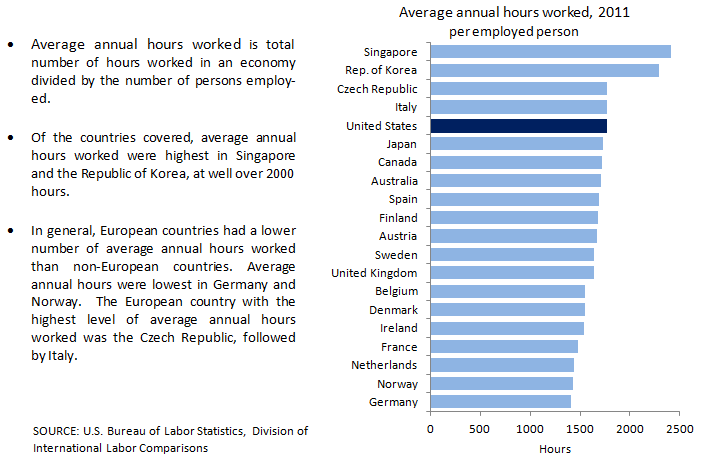
Japonya pek çok kişi tarafından verimliliğin yüksek olduğu bir ülke olarak algılanabilir. Ama rakamlar bu algıyı doğrulamıyor maalesef. Aşağıdaki grafikler ABD İş Gücü İstatistik Bürosundan alınma. İlk grafik "çalışan başına yıllık çalışılan toplam saat"i gösteriyor. Buna göre Asya kaplanları Singapur ve Kore çalışanları adam başı yılda ortalama 2,500 saate yakın çalışıyorlar! Japonya çalışma saatinde dördüncü. Yani çalışkanlık konusunda Asya'nın bu gelişmiş ülkelerinin üstüne ülke yok!


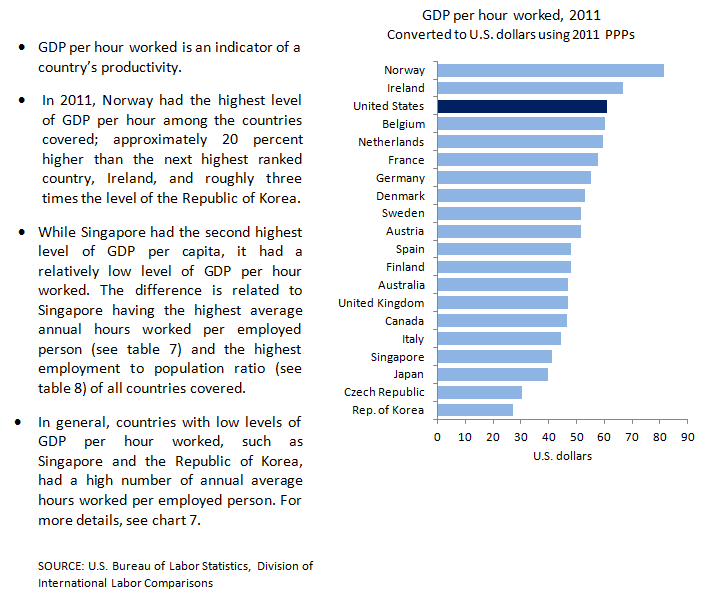
Fakat iş çalıştıkları saatlerden aldıkları verime gelince tamamen değişiyor! Aşağıdaki grafik "çalışılan her saate üretilen GDP". Asya Kaplanı Kore yerlerde sürünürken, Japonya ve Singapur da sonlara oynuyor!


İş yaşamımda ilginç bir göçmenlik dönemim oldu. 2-3 sene Singapur'da çalıştıktan sonra 1 sene Hollanda'da çalıştım. Sonra yeniden Singapur'a döndüm. Bu iki ülke çalışanlarının çalıştıkları saatlere ve ürettikleri işe şahit olmuş biri olarak şu grafiklerin hemen hemen doğru olduğunu söyleyebilirim: Hemen hemen zira muhtemelen bu grafik evde ve tatilde çalışılan saatleri işin içine katmıyor zira ortalama bir Singapur çalışanı Hollanda çalışanına göre şu grafikte görülenden çok daha verimsiz. Asyalılar gerçekten de şu grafikte yansıltılan şekilde deliler gibi çalışırlar ama o saatlerden çıkan işin miktarı benim gibi verimlilik konusunda sonlarda olan bir ülke vatandaşını bile hayal kırıklığına uğratacak kadar az olur.

Asya'nın kendilerini birinci dünyada sayan Japonya, Kore ve Singapur adlı ülkeleri iş verimliliğe gelince maalesef yerlerde sürünüyorlar. Çok çalışmak önemli ama verimli çalışmak daha da önemli. Verimsiz ama çok çalışan insanların sonu acı çeken Japon yönteicileri gibi olabilir. Benden söylemesi. 
Read More!

Best Hedge Funds 2012

We are do-it-yourself investors. Our favorite hedge funds are the ones that have outstanding long stock picks because we like to imitate these hedge fund managers and don’t want to pay the customary 2-and-20. Most hedge fund managers have more skill in picking long positions than shorting stocks, so we don’t really miss out much by not handing over our hard-earned dollars to super-rich hedge fund managers.

We track 375 hedge funds and prominent investors. Based on their long stock picks in their 13F disclosures we calculated the equal-weighted average return of each hedge fund since the beginning of the year. We limited our universe to 1000 stocks and required that each hedge fund had at least 5 picks. Here are the best hedge funds in 2012:

1. Eddie Lampert: Eddie Lampert’s 8 stock picks returned an average of 44.1%. This is amazing. Lampert’s most successful stock pick was Sears (SHLD). He not only bought these shares for his fund but he also bought them for his own account as an insider of the company. Lampert paid less than $30 per share for nearly 5 million shares of SHLD in early January. Is this illegal insider trading? We don’t think it is. This is a great example of profitable insider trading. Lampert knows his company better than all the outsiders who were writing Sears off in January. The stock closed above $75 on Friday. Lampert personally made more than 150% from his $150 million insider purchases.

Lampert’s other long positions in his portfolio were also very profitable. Seagate (STX) returned 67%, Genworth Financial gained 37%, and Gap Inc (GPS) returned 32%. Seven out of eight Lampert stocks managed to beat the market.

2. Bruce Berkowitz: Bruce Berkowitz is a contrarian investor with a lot of conviction. His bets paid off this year. Berkowitz’s 16 stock picks had an equal-weighted average return of 36%. He has more than $500 million invested in Sears too. He is also the most bullish fund manager about Bank of America (BAC) which returned 46% this year as of March 2nd.

3. Michael Katz Glenrock Global Partners: Michael Katz is a relatively unknown hedge fund manager. Katz’s Glenrock Global Partners returned 9.6% since 2000 and managed to beat its benchmark, MSCI World Index, by 9.4 percentage points annually. “We are basically long-short global stockpickers with a value bias, and we also pay close attention to the big macro picture. On the long side, we go for what we think are deeply undervalued stocks with lots of upside that we can buy at liquidation values or less. On the short side, we go for highly priced stocks with poor fundamentals that the market hasn't focused on yet,” Katz told to Barron’s. So how did Katz do since the beginning of this year?

Katz’s 13 stock picks in large cap stocks gained 30.6% this year. His best performing picks were Cobalt International Energy (CIE), SunTrust Banks (STI), Citigroup (C), and Morgan Stanley (MS). CIE gained 97% whereas financial stocks returned between 25% and 30%.

4. John Hurley – Cavalry Asset Management: John Hurley knows how to fire artillery. He fought during the first Gulf War as an officer of the First Cavalry Division. He also knows how to pick stocks. He founded Cavalry Asset Management in 2003 and manages more than $1 billion. His 16 technology picks had an average return of 29.4% this year. His top stock picks are Apple (AAPL), Microsoft (MSFT), Qualcomm (QCOM), eBay (EBAY), Seagate (STX), and Priceline (PCLN). All of these stocks outperformed the market this year. His focus in tech stocks makes sense. John Hurley is a lecturer at Stanford’s GSB.

5. Martin Hughes Toscafund Asset Management: Martin Hughes had a very concentrated portfolio of financial stocks. His 5 stock picks returned more than 27% this year. His top position was Citigroup.

6. Litespeed Management: Jamie Zimmerman was on Bloomberg last week having lunch with Jim Chanos and two other hedge fund guys. She likes distressed investing and thinks that buying companies that are in bankruptcy offers the best risk-return combination because there is more information about these companies than regular stocks. Well, she knows how to pick regular stocks too. Her 6 stock picks returned 26.3% since the end of 2011. The best performing stock picks were Seagate, Lyondellbasell (LYB), and General Motors. Wait a second, David Einhorn loves these stocks too, how did he do? Actually Einhorn sold out LYB but his top picks were Apple, Microsoft, GM. Seagate was his eighth largest position. Greenlight Capital’s 22 stock picks gained 20.8% this year.

We will post these rankings on our hedge fund page later this week. Let us list the performances of other well-known fund managers here:

9. Marc Lasry: 8 picks returned 25.1%

19. John Thaler JAT Capital: 29 picks returned 21.7%

26. Stephen Mandel: 40 picks returned 20.2%

30. Chase Coleman: 20 picks returned 19.2%

33. John Griffin: 39 picks returned 18.6%

43. Passport Capital: 51 picks returned 18.2%

54. Whitney Tilson: 28 picks returned 17.7%

186. George Soros: 62 picks returned 11.3%

194. John Paulson: 41 picks returned 11.1%

287. Warren Buffett: 32 picks returned 6.4%

The actual performance of these hedge fund managers may be substantially different from the the numbers we calculated. We only took into account their large-cap picks and gave equal weights to each position. We also excluded options, warrants, and other securities in each fund manager’s portfolio. Hedge fund managers also don’t report their short positions which may reduce or increase their overall returns. If you are interested in value-weighted returns of a particular hedge fund or some other customized report, just send us an email.
Read More!

Türkiye Ekonomisi ve Tasarruf

Türkiye ekonomisinin en ciddi yapısal sorunun tasarruf açığı olduğunu savunan biri olarak bu konu her gündeme geldiğinde ne kadar mutlu olduğu size kelimelerle ifade etmem mümkün değil. Daha önce Ali Babacan yükselen cari açık ile ilgili konuşurken bu soruna dikkat çekmişti, o zaman da sevinmiştim, aynı zamanda reel faizlerin bir türlü öngörülemeyen enflasyondaki zıplama yüzünden negatife dönmesiyle tasarrufların nasıl artacağı sorusunu zihnimde filizlendirmişti, pek çok mantıklı yorumcu da bu durumu sorgulamıştı. Ben bu şahıslar hakkında “mantıklı yorumcu” ifadesini kullanıyorum ama “faiz lobisi” diyen de var.

Konuyla ilgili bir'haber bugün Bloomberg’te yayınlandı. Çin’den sonra dünyanın en hızlı büyüyen ülkesi olan ve 2002 yılından beri %5,9'luk bir ortalama büyüme gerçekleştiren Türkiye ekonomisi bu verilerle şu anda sahip olduğu kredi notundan daha fazlasını hakettiği bir gerçek ancak şu an sahip olduğu tasarruf oranıyla da notun yükselmesi de zor. Bu yüzden Türkiye kendi ekonomisinin 12de 1'i büyüklükte olan Guetamala, Sırbistan gibi ülkelerle aynı kredi notuna sahipken yurtdışında yaptığı borçlanmalarda her 1 milyar dolarlık borçlanma için Rusya’nın ödediğinin 8 milyon dolar fazlasını ödüyor.


Bugün Goldman Sachs’ın Türk bankaları ile ilgili raporunda da bu konuya değiniliyor. Raporda yine Rusya ile yapılan bir kıyaslama var ve verilere göre son 10 yılda tasarruflar Rusya’da 12 kat artarken Türkiye’de sadece 4 kat artmış. Tabi demografik açıdan Türkiye’nin nüfusunun daha genç olması (dolayısıyla tüketime daha meyilli, tasarruf-tüketim kararında ağırlığın tüketimde olması) ve Rusya’nın hammadde ihraç eden bir ülke olarak cari fazla vermesi ve tasarruf edebilecek rezervlere sahip olmasının etkisi büyük. Goldman Sachs da zaten iki ülkenin bankalarının borsalarda fiyatlanmasında bu değişikliklere dikkat çekiyor. İki ülkenin kredi büyüme oranlarında da Türkiye ufak farkla önde, %37'ye %33. Temmuz 2012'de uygulamaya geçecek Basel II uygulaması ile de kredi büyümesinin daralacağını öngörmek için çok zeki olmaya gerek yok. Burada bir parantez açıp bunun en çok gayrımenkul sektörünü etkileyeceğini sözlerime ekleyeyim. Bir parantez de raporda Halkbank için “al” yorumu yapıldığı için açalım ki yabancı raporları takip eden herkes tahmin edebileceği bir şey bu.

Ülkenin tasarruf açığının ise cari açık ve tüketime dayalı büyümeyi nasıl beslediğini anlatmama gerek yok sanırım. İnsanlar belirli bir gelir elde ettiklerinde vermeleri gereken bir karar vardır, o da tüketim yaparak gereksinimlerini karşılamak ya da gereksinimlerini karşılamayı erteleyerek gelirleriyle tasarruf ya da yatırım yapmak. Ülkemizde insanların kararlarında tüketim daha büyük bir ağırlığa sahip olduğundan ve başta enerji olmak üzere üretim sistemi de pek çok girdisini dışarıdan karşıladığından yüksek cari açıklarla karşılaşıyoruz. Düşük faiz oranları insanları tasarruf yapmaktan alıkoyarken tüketimi de daha cazip hale getiriyor. Bütün bunlar olurken de mevduat vade ortalamasının bir ay, kredi vade ortalamasının bir yıla yakın olduğu bankacılık sisteminde, bankalar nakit akımlarında vadesel eşgüdümü sağlamak için bin dereden su getiriyor. Sonuçta hem reel kesim, hem de finansal kesim ciddi bir kırılganlığa sahip oluyor.


Goldman Sachs analistlerinin hazırladığı yukarıdaki grafikte de yine Türkiye ve Rusya’nın büyüme kompozisyonları kıyaslanıyor ve dış ticaret 14 baz puanlık ve tüketimde 20 baz puanlık Rusya lehine olan farka dikkat çekiliyor.

Bloomberg haberinde bir de BDDK raporuna dikkat çekiliyor. BDDK raporuna göre toplam kredilerin %85′i aylık geliri 1.200$ altında olan kesim tarafından kullanılıyor, mevduatın 47′si ise toplam nufüsa oranı %0,1 olan bir kesim tarafından tutuluyor. Demem o ki Türkiye halkı borçlu, üstelik bu borcu kapayacak ne geliri, ne de tasarrufu var.

Kapkara bir tablo çizmek istemiyorum ama finansal sistemin barındırdığı ve eğer giderilmezse ekonominin tamamını ciddi şekilde etkileyecek sorunları barındırdığı bir gerçek. Read More!

Hedge Funds' Favorite Stocks

Hedge fonlarin satin aldiklari hisselere baktigimiz zaman hangi sektorlerin ucuz oldugunu hemen bulabiliyoruz. Insider Monkey son ceyrekte 375 than hedge fonun yaptigi islemleri analiz edip bir yazi yayinladi. 10 Most Popular Stocks Among Hedge Funds basligini tasiyan bu yaziya gore teknoloji ve finansal sirketler su an en ucuz sektorler. Analizin devamini ve yeni analizleri Insider Monkey sitesinden takip edebilirsiniz. Read More!

Warren Buffett'in Yatirimcilara Son Mektubu

Warren Buffett bugun yatirimcilara hitaben yazdigi mektubunu yayinladi. Borsada yatirim yapan bir cok yatirimci Warren Buffett'in senede bir defa yayinladigi bu mektuplari kacirmadan okur. Siz de bu mektubun tamamini okumak istiyorsaniz Warren Buffett 2011 Shareholder Letter linkini ziyaret ediniz. Read More!

Zacks Insider Trading

Insider trading konusunda calistigimi daha once anlatmistim. Piyasalarda gorulen anomalilerle ilgili bir kitapta insider trading bolumunu de gecen sene yazdigimi belki soyledim, belki de soylemedim. Neyse, bu kitap gectigimiz aylarda yayinlandi, bir de websitesi yaptilar. Websitesini pek kimsenin ziyaret ettigini zannetmiyorum ama. Yine de ilgilenenler Zacks insider trading sitesini ziyaret edebilirler. Read More!

PatronTurk: Is Dunyasindan ve Zenginlerden Haberler

PatronTurk sitesi ile yeni bir link degisimi gerceklestirdim. Amacim ekonomi ve finansla ilgili konularda yazilar yayinlayan sitelerden benim su an uzerinde calistigim sitelere link almak. PatronTurk sitesi is dunyasi ile ilgili haberleri derleyerek yayinliyor ve daha once de Warren Buffett hakkinda yazilmis bir kac tane yazisi var: Warren Buffett fiyati dusen hisseleri havada kapti, Warren Buffett Insider Trading ve Dunyanin En Zenginleri Listesindeki Turkler.
PatronTurk sitesinin yaptigi gibi bizimle link degisimi yapmak isteyenler bize email ile ulasabilirler. PatronTurk sitesinin pagerank'i 3 ama buna ragmen ben pagerank'i 5 olan Ekonomi Turk'ten link veriyorum. Bunun bana faydasi ise PatronTurk sitesinin pagerank'ini yukselterek aldigim linklerin daha da degerli olmasini saglamasi. Read More!

Jim Cramer Stock Picks

One of the screens we use to pick stocks is Jim Cramer’s stock picks. Jim Cramer has a bad reputation because he makes thousands of recommendations on TV and investors tend to remember bad experiences, not the good ones. You wouldn’t believe this but there is an academic study that showed that Cramer’s stock picks actually beat the market by a significant margin. In this article we will take a closer look at five stocks that are in Cramer’s charitable trust’s portfolio and decide whether they are good investments for investors looking for large capital gains.

Apache Corp (APA): APA is the largest US energy stock in Cramer’s trust. As of February 15, 2012, the fund owns 1050 shares of APA, which worth about $113,000. APA is also quite popular among hedge funds. At the end of the third quarter, there were 30 hedge funds with APA positions.

Yazinin devamini Jim Cramer's Stock Picks sayfasindan okuyabilirsiniz. Read More!

Niye Link Istiyoruz?

Ekonomi Turk blogunu vakti zamaninda ayda 60-70 bin kisi ziyaret ediyordu. 2010'un ortalarina kadar cok saglam yazilar yayinladik ama Turkiye'de insanlar cok politik olduklarindan bize pek bir ilgi gosterilmedi acikcasi. Blogdan oyle fazla bir para da kazanamiyorduk. Neticede Ekonomi Turk blogunun arama motorlari nezdindeki kredibilitesinden yararlanarak Insider Monkey isimli bir site baslattik.

Boynuz kulagi gecermis derler. Insider Monkey'nin okuyucu sayisi Ekonomi Turk'u 1.5 senede ikiye katladi. Ustune ustluk Insider Monkey ingilizce bir blog oldugu icin reklamlardan kazandigimiz ucretler de Turkiye'deki reklamlarin 5-10 kati civarinda seyrediyor. Neticede Insider Monkey sitesinden kazandigimiz para dise dokunur miktarlara yukseldi. Sitede yazan 1-2 tanede part-time yazar ise aldik, Amerika'nin issizlik oranini dusurduk.

Durmak yok. Bundan sonra siteyi buyutmek daha kolay. Sitenin pagerank'i 6'a yukseldi. Amacimiz bunu daha da yukarilara yukseltmek. Gecen aylarda David Einhorn kelimesinde arama motorlarinda yukarilara cikmak icin calisiyorduk, simdi daha zor olan Warren Buffett kelimesinde ilk 10'a girmeye calisiyoruz. O yuzden de bize link verenlere biz de Ekonomi Turk veya diger sitelerimizden esdeger veya daha yuksek pagerank'e sahip link verecegiz. Link verebilecegimiz siteler arasinda sunlar var:
Turkish Economy
Finans Turk: pagerank 2
Turk Finans: pagerank yok
Turk Economy: pagerank 3
Turk Ekonomi: pagerank 2
Ekonomi Turk: pagerank 5
Sitenizin pageranki 3-4 arasinda ise Ekonomi Turk sitesinden link verecegiz, eger sitenizin pageranki daha dusuk ise diger 5 siteden bir tanesinden link verecegiz. Ilgilenenler mail atsinlar. Read More!

8 UBS Stock Picks for 2012

UBS Investment Research’s report, “US Morning Meeting Highlights”, from January 13th discusses how stocks will be affected from the elections. The analysts are of the opinion that Obama’s victory would have a positive impact on “tech and industrial companies”, whereas the “healthcare, financial, energy and consumer” companies will be negatively influenced due to tougher regulations. A republican victory, on the other hand, could prove to be beneficial for “universal banks, managed care, coal, defense, and high-end consumer stocks”.

In this article, we will discuss the buy-rated stocks mentioned in UBS’s report (read the first part of this article).

Mattress Firm (MFRM) has been given a buy rating by UBS. Due to the economic downturn, the company has not been able to generate adequate sales to meet its previous records. However, it has set a target of around $1 million in sales per store for 2012. The idea of testing mall locations in Oklahoma is currently under consideration as it may help the company in expanding, given favorable results are derived from this activity. UBS does not expect the firm to experience a shift in the product mix to specialty products; thereby it is expected to give a stable outcome for the year 2012. Shares of the company were trading around $26 per share at the time of the publication of this report and are expected to go north of $30 by the end of 2012. Its earnings-per-share estimate has also been revised upward to $1.2 for 2013. UBS seems on target with its predictions as the stock increased to $31.04 on Friday.

CVS Caremark Corporation (CVS) is a pharmaceutical company based in the U.S. It has been given a buy rating by UBS, due to its expected ‘multi-source, generic launches’ in 2013. These launches are likely to have spillover effects which will prove to be beneficial for the Pharmaceutical sector. The expected merger between Express Scripts (ESRX) and MedcoHealth Solutions (MHS) is also expected to have a combined positive impact on the industry. Shares of CVS are currently trading around $42 per share and are expected to reach a price target of $48.

The company has a beta of 0.82 which shows that its shares are not volatile in nature. Also, its operating margin of 6% is greater than the industry average of 3.5%. CVS has a low price-to-equity ratio of 17x and a dividend yield of 1.5%. Billionaire John Paulson and Warren Buffett’s Berkshire Hathaway initiated brand new positions in CVS during the third quarter (see Warren Buffett’s portfolio).

CONSOL Energy (CNX) produces multi-fuel energy in the U.S. The company has been given a buy rating by UBS. With NatGas storage levels at a high and production that is exceeding expectations, UBS has lowered its NatGas forecast. CONSOL currently has low-cost operations in NatGas, making it susceptible to the increased supply. This will most likely affect CONSOL’s performance in the short-term. UBS analysts are of the opinion that CONSOL may now be considering share buybacks. Shares of the company are currently trading around $36 per share and are expected to go north of $73, indicating an upside potential of more than 100%.

CONSOL’s operating margin of 15.6% is significantly higher than the industry average of negative 0.2%. It also has a significantly lower price-to-sales ratio of 1.3x versus the industry average of 8.7x, indicating that it has the potential to turn things around in case of adverse conditions. Sonterra Capital initiated a brand new $154 million position in CNX during the third quarter. Steve Cohen’s SAC Capital boosted its stake in the company by 24% over the third quarter as well (see billionaire Steve Cohen’s top stock picks).

MVC Capital (MVC) engages in private equity investments. It has been given a buy rating by UBS. The company is currently investing its equity in three different companies and two other private equity funds. Around 30% of its portfolio is based in Europe, making it more volatile. Despite that, MVC Capital’s net asset value has increased with the appreciation of Security Holdings. Shares of the company are currently trading at $12.5 per share and are expected to reach a price target of $16. Earnings per share are expected to reach an estimate of $0.34, by the year 2013. Nelson Obus’ Wynnefield Capital had $16 million invested in MVC at the end of September.

AmerisourceBergen (ABC) is a pharmaceutical company that distributes drugs and provides healthcare services. It has been given a buy rating by UBS Investment Research. The likely merger between Express Scripts (ESRX) and MedcoHealth Solutions (MHS) will result in AmerisourceBergen losing the contract with Medco in 2013. This is why UBS is taking a conservative stance with regards to the company. It has also lowered AmerisourceBergen’s earnings per share and price target expectations. Shares of the company are currently trading at $39 per share and are expected to reach a price target of $44. Robert Emil Zoellner’s Alpine Associates is by far the most bullish hedge fund about ABC with a $261 million position at the end of September.

Cardinal Health (CAH) provides pharmaceutical services. It has been given a buy rating by UBS. The new CEO is confident that the company will retain its contract with Express Scripts. Also, UBS does not see any additional risks associated with the precarious relationship between the two companies. UBS has taken a conservative stance on the generics for drug distributors, which has resulted in a review of earnings per share for Cardinal Health. Shares of the company are currently trading at $42.34 per share and are expected to reach a price target of $51, based on a 14.5x price-to-equity ratio. Larry Robbins’ Glenview Capital and Joe Healey’s Healthcor Management are bullish about Cardinal Health.

Express Scripts (ESRX) engages in the provision of pharmacy benefit management services in North America. The potential merger with MedcoHealth Solutions (MHS) has had a positive impact on the company’s valuations. UBS has increased its earnings per share estimates above consensus expectations. Express Scripts has kept more than 95% of its prescription volume, going into 2012, giving UBS enough reason to have a $3.6 estimate for the company’s earnings per share. The company’s shares are currently trading around $51 per share and are expected to go north of $66, indicating a potential upside of 29%. Jim Simons’ Renaissance Technologies had $143 million in ESRX at the end of September (see billionaire Jim Simons’ portfolio).

McKesson Corporation (MCK) engages in the delivery of medicines and pharmaceutical supplies to the Healthcare industry. It has been given a buy rating by UBS Investment Research. UBS believes that McKesson’s management is quite positive about the company’s short term prospects. McKesson is considering shifting its investment towards a lower cost Paragon line. Investors view this shift as a positive change. Shares of the company are currently trading around $79 per share and are expected to reach a price target of $99. Lee Ainslie’s Maverick Capital initiated a $322 million position in MCK during the third quarter.

Bu yazi 8 UBS Stock Picks for 2012 adresinden alinmistir. Read More!

Şimdi ev almanın tam zamanı ya da yorgandan dışarı fazla uzanan ayağın hazin sonu

Forbes’ın haberine göre 21 yıl aradan sonra ilk defa bir emlak şirketi super bowl arası reklam verecekmiş. Reklamın kısa ve öz mesajı, bir varlığın satışından ya da yönetiminden komisyon alan kişi ve kurumların her zaman söylediği türkü şeklinde olacak muhtemelen: Şimdi ev almanın tam zamanı! Şimdi kredi almanın tam zamanı! Şimdi hisse senedi almanın tam zamanı. Tabii ki öyle, şimdi alırsan adam şimdi komisyon alır.

Neyse Mises Blog Century 21 adlı güzide firmanın Birleşik Devletler emlak balonu patlamadan hemen önce yayınladıkları reklamı hatırlamış. Century 21’in unutmayı yeğleyeceği bir reklam bu. Aşağıdaki videodan izleyebileceğiniz bu reklamda ayağını yorganına göre uzatmaya meyilli evin beyinin, “daha fazlasını iste, mali gücün olmasa bile” mottolu evin hanımı ve güleryüzlü emlakçı tarafından “başarabilirsiniz” nidaları eşliğinde mali yıkıma sürüklenişini izliyorsunuz. Sene 2006.


Tabii burada şuçu (birbirlerine göre hayatta döndükleri köşelerin sayısını karşılaştırmaya daha fazla zaman harcadıkları için) bu tür tuzaklara düşmeye maalesef daha fazla meyilli kadınlara ya da ay sonunda aldığı parayı düşünürken hayatının amacı sizin hayalinizdeki yuvayı size bulmakmış gibi davranan becerikli emlakçıya atmak kolay. Yahu iyi güzel de kabahatin hepsi onların mı? Yorgandan dışarı kulaç kulaç açılan ayağın hiç mi suçu yok?
Read More!

Hedge Fund Performance

HSBC published the Hedge Weekly for the week of Jan 30 to Feb 3, revealing a list of hedge funds’ performances in January 2012. Some of the hedge funds haven't reported any 2012 returns yet. Overall, it seems most hedge funds’ returns are on their way back to positive. Let’s take a look at them.
1. John Paulson – Paulson & Co: Hedge Weekly updated Paulson’s 2011 year-end returns. Through the end of 2011, Paulson’s Credit Opportunities fund lost 18.24% His Advantage fund lost 35.96%. His Advantage Plus fund lost 52.64%, and his Recovery fund lost 27.73%. It's been recently reported by several financial media outlets that Paulson returned around 5% in January 2012.
2. Bill Ackman – Pershing Square: Pershing Square gained 1.10% during the first 13 days of January.
3. Dan Loeb – Third Point: Loeb’s Third Point Offshore fund returned 3.8% during the first 13 days of January 2012.
4. Lee Ainslie – Maverick Capital: Maverick Fund gained 5.89% through January 27, 2012.
5. Jim Simons – Renaissance: Renaissance Institutional Equities gained 0.01% during January 2012.
6. Israel Englander – Millennium: Englander’s Millennium Intl Ltd gained 1.20% in the first 26 days of January.
7. James Dinan – York Capital: Dinan’s York Investment Ltd. gain 2.50% through January 20.
8. Steve Heinz – Lansdowne: Lansdowne’s European Long Only fund gained 4.52% from December 31 to January 27. Lansdowne’s UK Equity fund gained 5.67% in the same time period.
9. Joshua Friedman – Canyon Capital: Canyon’s Balanced Fund lost 4.57% last year. Its January performance is unavailable.
10. Edward Mule – Silver Point Capital: Silver Point Offshore fund gained 0.71% during the 13 days of January.
11. John Bader – Halcyon: Halcyon Offshore Asset-Backed Value Fund is up 0.57% during the first 17 days of January.
12. Richard Perry – Perry Capital: Perry Partners Intl gained 3.61% as of January 27th.
13. Robert Karr – Joho Capital: Joho Capital is up 0.1% through December 31, 2011 to January 27, 2012
14. John Horseman – Horseman Capital: John Horseman’s Global Fund returned 1.39% through January 31.
15. Mark Kingdon – Kingdon Capital: Kingdon Offshore fund gained 6.24% through January 27.
16. Andrew Feldstein – Blue Mountain Capital Management: Blue Mountain Equity Alternatives gained 0.40% through January 27.
17. Curtis Macnguyen – Ivory Capital: Ivory Capital’s Flagship Strategy gained 2.18% through January 27.
18. Michael Messner – Seminole: Michael Messner’s Seminole Capital gained 1.90% in January.
19. Boaz Weinstein – Saba Capital: Saba Capital Offshore returned 0.37% during the first 6 days of January.
20. Thomas Kempner – Davidson Kempner Capital: Davidson Kempner International Class C lost 2.87% last year. The fund was up 0.33% in December.
21. Jacob Gottlieb – Visium Asset Management: Visium Institutional Partners Fund is down 0.08% through January 27.
22. Philippe Jabre – Jabre Capital: As of January 24th, Jabcap Global Balanced Fund Ltd is up 2.5%.
23. Glenn Dubin – Highbridge: Highbridge Long/Short Equity Fund is up 3.58% through January 27.
24. Andreas Halvorsen – Viking Global: Viking Global Equities is up 1.27% through January 27.
25. John Murphy – Alydar: Alydar Fund Ltd lost 0.68% in 2011, and was down 0.8% in December 2011.
26. Leon Cooperman –  Omega Advisors: The Omega Overseas fund was down 1.44% last year. The fund gained 0.83% in December.
27. Ricky Sandler –  Eminence Capital: Eminence Fund is up 4.1% in January.
28. Tom Claugus – Bay Resources:  Partners Offshore fund lost 9.13% in 2011.
29. Paul Tanico – Castlerock: The fund lost 23.84% in the past year. It also lost 3.25% in December.
30. Wayne Cooperman - Cobalt: Cobalt Offshore fund lost 0.69% in 2011. The fund lost 0.28% in December.
31. David Einhorn - Greenlight: Greenlight Capital is up 3% through the end of January.
32: Crispin Odey - Odey Asset Management: The Odey European fund gained 4.18% in the first 13 days of January.
33. Jeffrey Altman – Owl Creek Asset Management: Jeffrey Altman’s hedge fund is up 4.5% through January 27.
34. Paul Tudor Jones – Tudor Investment Corp: Tudor Tensor Fund is up 0.09% through January 27. Tudor BVI Global gained 1.66% during the same period.
35. Alan Howard – Brevan Howard: Brevan Howard Master gained 0.45% through January 20.

Bu yazi ilk olarak Hedge Fund Performance January 2012 adresinde yayinlanmistir.
Read More!

Yurtdışına seyahat sigortasız çıkmak

Gelecek hafta Türkiye'den bir arkadaşım eşi ile beraber ziyaretime geliyor. Genelde beni ziyarete gelenlerin coğu gibi tamamen nereleri gezip görsek kısmına odaklanmış vaziyetteler. Ben ise her zaman yaptığım gibi iki önemli sorumu soruyorum: (1) bana peynir, zeytin, bal ve sucuk getirmeyi unutmadınız değil mi? (2) yurtdışı seyahat sigortası yaptırdınız mı?

“Himmm, yaptırmadık, şart mıdır?” Bu tepki standart. Eskiden millet yurt dışına sadece turla çıktığından ya da sadece Avrupa’ya,  Amerika'ya gittiginden ve bu ulkeler yurtdışı seyahat sigortasını zorunlu tuttugundan, bizim memlekette bu sigortanın bizim için hayati olduğu pek algılanmıyor. Ben her zaman soruyorum zira ziyaretime gelen her Türk vatandaşının bu sigortayı sallamayacağını ya da hepten unutacağını biliyorum. Singapur, Tayland, Malezya Türklerden vize istemediğinden yurtdışı sigortası buralara gitmek için şart değil. Vizesiz seyahat çok güzel bir şey, pasaportu kapıp elini kolunu sallaya sallaya başka bir memlekete girmek ya da hayatınızın amacı o memlekete kapağı atma varsayımı ile kapıda sorgulanmadan sınırı geçmek. Ama bu elini kolunu sallaya sallaya gelme konusunu da abartmamak lazım. Geçenlerde bir arkadasim yurtdisi seyahat sigortasi yaptirmadan geldi ornegin, Endonezya, Tayland ve Singapur'u sigortasiz gezdi. Insanlarda bu bolgeler ucuz yerler oldugu icin hastanelerin de ucuz olacagina dair tamamen yanlis bir varsayim var.

“Şart değil ama buralarda hadi olmaz ya başınıza bir iş gelirde hastanelik olursanız mahvolursunuz” dedim ben de. Tayland’da örneğin Allah korusun bir yol kazası geçirseniz, sonrasında da ameliyat gerekse o hastaneden on binlerce dolar ödemeden çıkamazsınız. Sadece kaza değil, hırsızlık, hastalık, hukuki işlemler sizi finansal olarak çok zor duruma sokabilir. Sadece standart bir sigorta paketi yaptırıp da çıkmayın. Sigortanın kapsama alanına da iyice bakın. Örneğin skuba dalışı yapacaksanız seyahat sigortasının bu aktivite sonucu hastanelik olmanızı karşılayıp karşılamadığına iyice bakın. Standart sigorta paketleri genelde bu tür aktiviteleri kapsama alanı dışında tutacaktır.

Kısacası siz siz olun yurt dışı seyahat sigortası yaptırmadan yurt dışına adım atmayın. Sigortasız bir yurt dışı tatilinde başınıza gelebilecek tek bir kaza ile tüm hayat birikimlerinizi kaybedebileceğiniz gibi ödeme güçlüğü nedeniyle geciken bir müdahale ile hayatınızı da kaybedebilirsiniz.

Read More!

Best Power and Utilities Stocks Recommended by Barclays

Barclays Capital published a report entitled “Go with the Flow” on January 03, 2012. Daniel Ford, Gregg Orrill, Theodore W. Brooks, Ross A. Fowler, M. Beth Straka and Noah Hauser have identified their most preferred power and utilities stocks for investment in 2012. Here are the five stocks Barclays Capital is bullish about:

American Electric Power (AEP) has been given an over-weight rating by Barclays Capital (BCS). The company received a final judgment on its Ohio generation and distribution cases on December 14, 2011. The Ohio jurisdiction has substantial impact of 30-40% on American Electric Power’s earnings, indicating a material future earnings growth. Even though both cases were settled, the stock was still trading at a 12% discount through the day of the ruling two weeks ago. However in the two weeks after the ruling, the stock outperformed the regulated group by 1.1% i.e. it was up by 7.6% versus the 6.5% regulated group increase. Barclays Capital expects the outperformance to continue in 2012. Moreover, American Electric Power, along with other partners, announced a plan to build a gas pipeline in Ohio for the purpose of transporting Utica shale gas to the Eastern marketplace. Barclays Capital believes that American Electric Power will earn $3.10, $3.17 and $3.28 in 2011, 2012 and 2013 respectively. Although the stock has performed well recently, it still trades at an 11% discount to its peers. This is despite the new earnings visibility and a 4.5% yield indicating a 10% premium to the average dividend yield for regulated utilities. Barclays Capital has given a price target of $45 per share, indicating a regulated group utility multiple of 13.3x their 2013 EPS estimate of $3.28, plus $1/share of cash. Jim Simons’ Renaissance Technologies had the largest stake in AEP among the 350+ hedge funds we are tracking.

Northeast Utilities (NU)/NSTAR (NST) has been given an over-weight rating by Barclays Capital. In view of Barclays Capital, once the company’s merger with NSTAR (NST) is finalized, it should create one of the best positioned large cap regulated utilities in Barclays Capital’s coverage universe. NSTAR shareholders will receive 1.312 Northeast Utilities shares under the merger agreement. All currently required regulatory approvals have been granted, except for those from the Massachusetts Department of Public Utilities (DPU) and the Nuclear Regulatory Commission (NRC). It is expected that the merger will be completed in early 2012. Merger Agreement requirements expire April 16, 2012. Upon merger completion, Northeast Utilities shareholders will see their dividends to be in par with NSTAR’s shareholders. Barclays Capital believes the combination of an attractive 3.8% dividend yield, and dividend growth aspirations in line with earnings growth of 6-9% will continue to be a convincing investment feature. Barclays Capital’s $39 per share price target for Northeast Utilities shares is based on the ‘13E EPS of $2.63. This includes a $1.27E transmission on a 16.4X comparable multiple equivalent to $21, and $18 for the distribution business. This is based on the ‘13E of 41.36 on a 13.5X regulated group multiple. A large-cap premium is offset by current regulatory uncertainty. Barclays Capital’s $49 per share price target for NSTAR is based on Northeast Utilities ‘13E EPS of $2.63. This includes a $1.27E transmission on a 16.4X comparable multiple equivalent to $21, and $18 for the distribution business. This is based on the ‘13E of 41.36 on a 13.5X regulated group multiple. The resulting $39 per share is multiplied by 1.312 Northeast Utilities shares. Barclays Capital then applies a 5% discount for regulatory uncertainty. D. E. Shaw had the largest stake in NU among the hedge funds we are tracking.

OGE Energy Corp. (OGE) has been given an over-weight rating by Barclays Capital. OGE energy Corp. combines a top-performing regulated electric utility with a rapidly expanding mid-stream gas pipeline business, Enogex. Enogex operates in the most profitable basin in the U.S. and contributes approximately 25% to the overall business net income. OGE is exclusively positioned to achieve top-quartile long-term EPS growth and consistent steady dividend growth. Barclay’s capital is forecasting a consolidated five-year (2009-2013) earnings per share growth of 9.5% from a utility rate base growth and expansions in Enogex’s gathering and processing. Barclays Capital value OGE on a forward price-to-earnings multiple for the utility component, and a forward EV/EBITDA for Enogex. Barclays Capital has given a $59 per share price target based on a consolidated 2013E EPS of $3.95. This consists of a $2.86E for the utility, taking out $0.04 for the Holding Co. base on a 13.6x regulated group P/E multiple. This is also discounted by 5% for the regulatory risk associated with its pending rate case. This results in $36 to which $23 for Enogex is added. This is estimated based on an assumed 81% ownership on an EV/EBITDA of $2,911 million and a 9.5X comparable multiple. Adage Capital Management had $37 million invested in OGE at the end of September.

Calpine Corp. (CPN) has been given an over-weight rating by Barclays Capital. Calpine Corp is the only spark spread generator in power. The company is most exposed to tighter power markets while being least sensitive among its peers to gas prices. Barclays Capital likes Calpine Corp for its primary exposure to Texas and California power markets, for the company’s discipline is to use excess cash flow to repurchase stock, and for CEO Jack Fusco who has a history of outperformance in the sector. Barclays Capital believes that the company has the best fleet of combined cycle gas plants in the industry. The company should strengthen its portfolio by looking at areas like the Southeast or the North for expansion and then repurchase stock with the proceeds. The company also expects to bring on-line the 75% owned 619 MW Russell City project in 2013 along with the 120 MW Los Esteros expansion/conversion to combined cycle in California. Barclays Capital has given a price target of $18 per share. This estimate is based on $18 for Open EBITDA at 7.1x $1.64 Billion for the gas assets and $436 Million at 9.6x for geothermal. The Price Target is also based on $17 for the asset value which includes enterprise value of $14.5 Billion and is $520/kw. Billionaire Phil Falcone’s Harbinger initiated a new position in CPN during the third quarter.  

AES Corporation (AES) has been given an over-weight rating by Barclays Capital. The new CEO Andres Gluski aims to initiate a quarterly dividend yielding 1.3% annually and take it to 2-3%. Gluski also aims to reduce geographic spread from 28 to 20 countries and cut costs aggressively. The company would raise $2 Billion over the next few years through asset sales. The 2012 EPS guidance is $1.27-$1.37, with AES focusing on the midpoint of the range. Looking from a base as per Barclays Capital forecast of $0.98 in 2011, drivers are new projects and the DPL merger accretion, the absence of DPL merger costs, cost cuts, and free cash flow. Downsides to this would be the Eletropaulo rate case in Brazil and currency sensitivities. Barclays Capital’s price target of $16 per share is estimated by averaging results of three valuation methods independent estimates of which are $18, $13 and $15. $18 is from a sum of parts valuation which includes $3.24 Billion in EBITDA from unlisted subs applied to 6.7x, $314 Million for a renewable EBITDA applied to a 8x multiple, $6/share for listed subs, and $15.5 Billion in proportional net debt and 797M shares. $13 is estimated from 6.7x $3.7 Billion in 2012 proportional EBITDA less proportional net debt of $15.5 Billion and 797M shares. And $15 is derived from 11.6x the 2012 EPS of $1.38. All multiples use International Power as a comparable. Steven Cohen’s SAC Capital boosted its stake in AES by 13% during the third quarter.
Read More!